Recognize the Diagnosis
Before It's Too Late
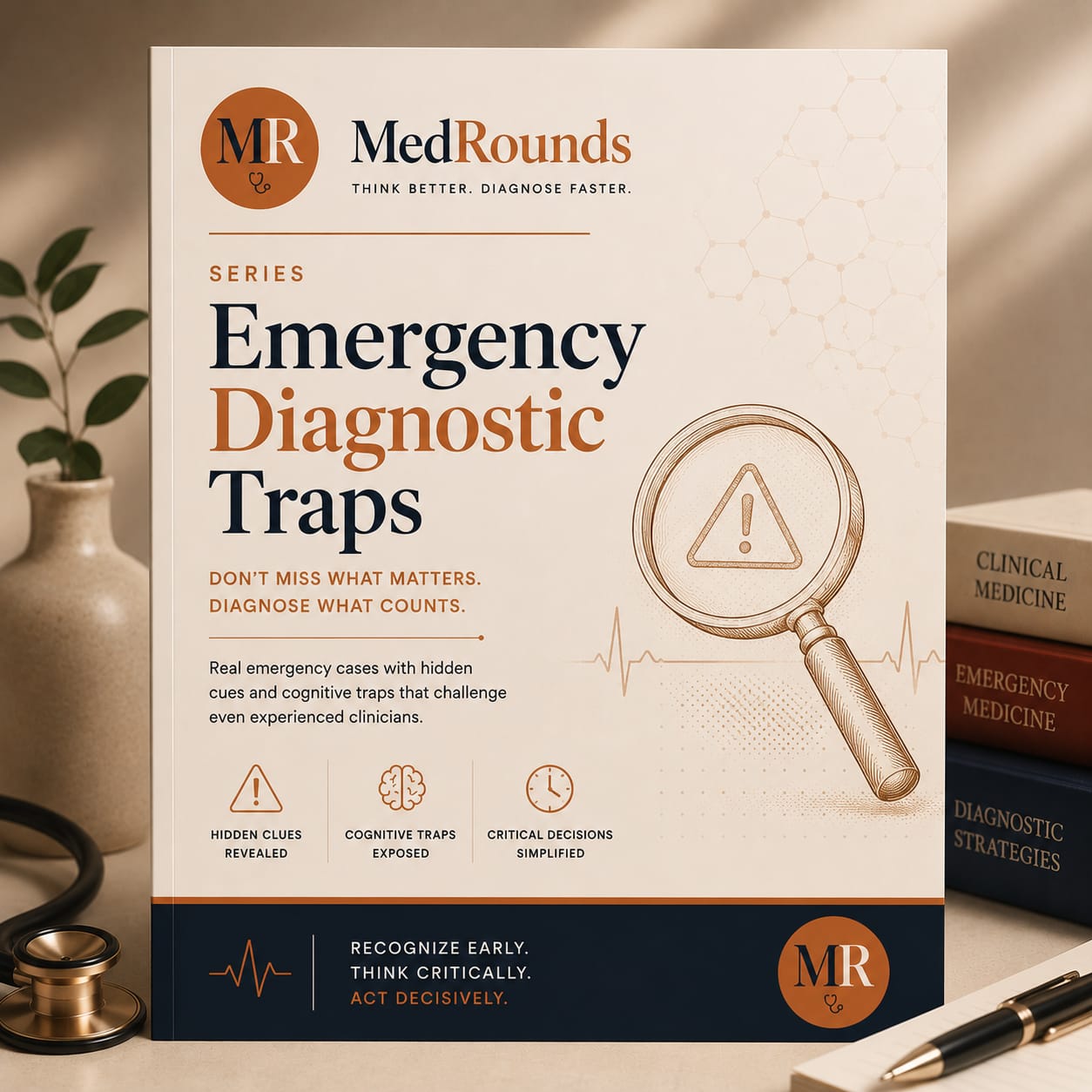
Cases that look harmless until they're not. Learn to identify misleading presentations, hidden emergencies, and the clues doctors often overlook.
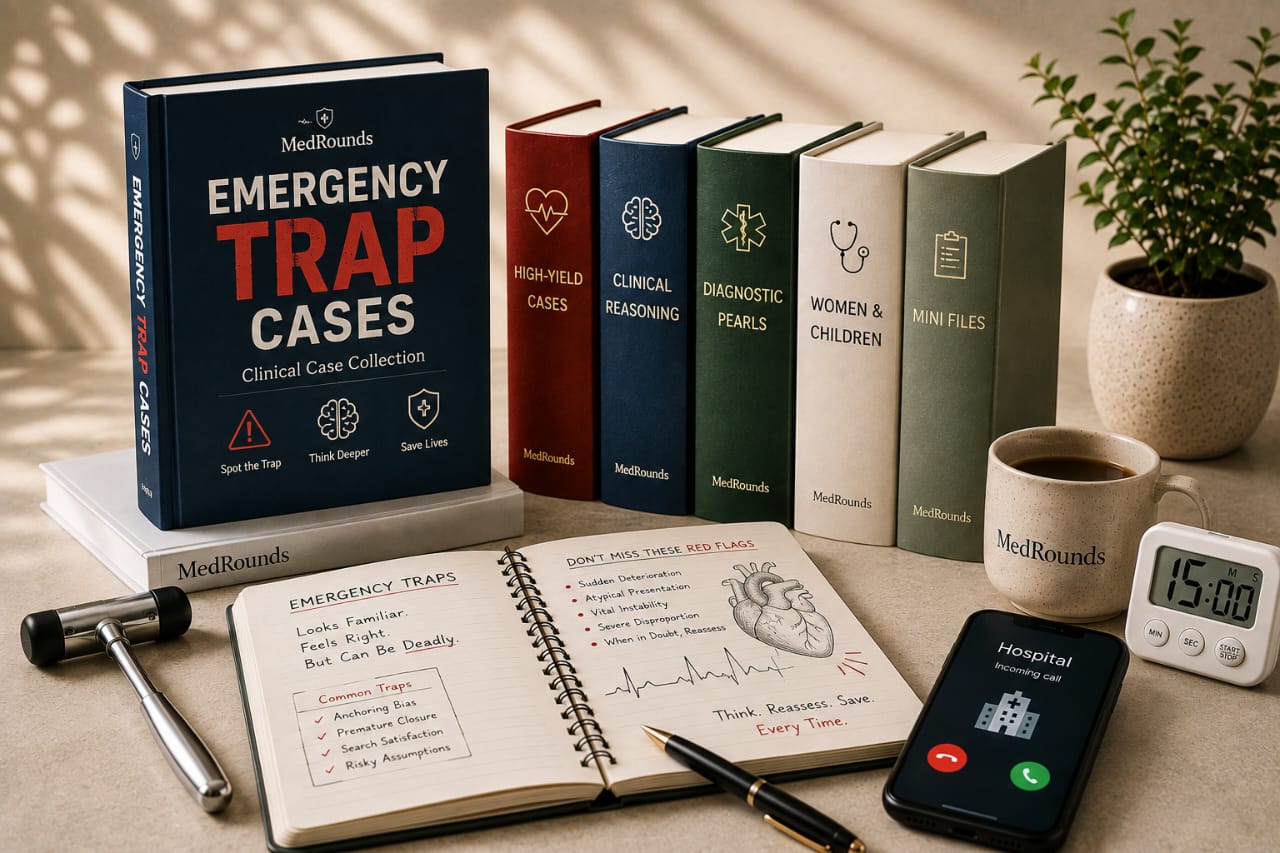
- Time-critical diagnoses
- Atypical presentations
- Cognitive traps
- Rapid decision-making
Emergency Cases Vol 1
35 carefully curated emergency cases that train you to recognize diagnostic pitfalls, avoid common mistakes, and build…
Emergency Cases Vol 1
New to MedRounds?
See how MedRounds cases help you think through a case, not just reveal the diagnosis.
Why This Series Matter
Many serious illnesses don’t present in the way textbooks describe them.
A patient with an acute coronary syndrome may complain only of indigestion. A life-threatening neurological emergency may initially appear benign. A missed clue can delay treatment and change outcomes.
Emergency Trap Cases focus on presentations that mislead clinicians and challenge conventional thinking.
These cases teach you to slow down, reassess your assumptions, and recognize the subtle findings that separate routine cases from genuine emergencies.
What you’ll gain:
- Better recognition of hidden emergencies
- Earlier identification of red flags
- Improved decision-making under pressure
- Greater awareness of diagnostic pitfalls
- Stronger clinical judgment in time-critical situations
FAQS
1. What are emergency trap cases?
These are cases in which the initial presentation appears harmless or misleading, potentially delaying the correct diagnosis and treatment.
2. Why are these cases important?
Recognizing hidden emergencies can significantly improve patient outcomes and reduce diagnostic errors.
3. What kinds of emergencies are covered?
The series includes medical, neurological, surgical, pediatric, and other time-sensitive clinical presentations.
4. Does this collection focus on diagnostic mistakes?
Yes. A major focus is understanding why diagnoses are missed and learning how to avoid common cognitive errors.
5. Are atypical presentations included?
Yes. Many cases feature presentations that differ from classic textbook descriptions.
6. How quickly can I review a case?
Most emergency cases are designed to be completed within 5-8 minutes.
7. Will this series help improve clinical decision-making under pressure?
Yes. The cases are specifically designed to strengthen rapid clinical assessment, diagnostic reasoning, and decision-making in high-pressure situations.
Explore more from MedRounds
Discover other premium case series, concise clinical guides and articles designed to strengthen clinical reasoning and improve diagnostic confidence.