
Think Beyond the
Temperature
Learn how experienced clinicians approach fever through real cases, diagnostic reasoning, red flags, and evidence-based decision-making.
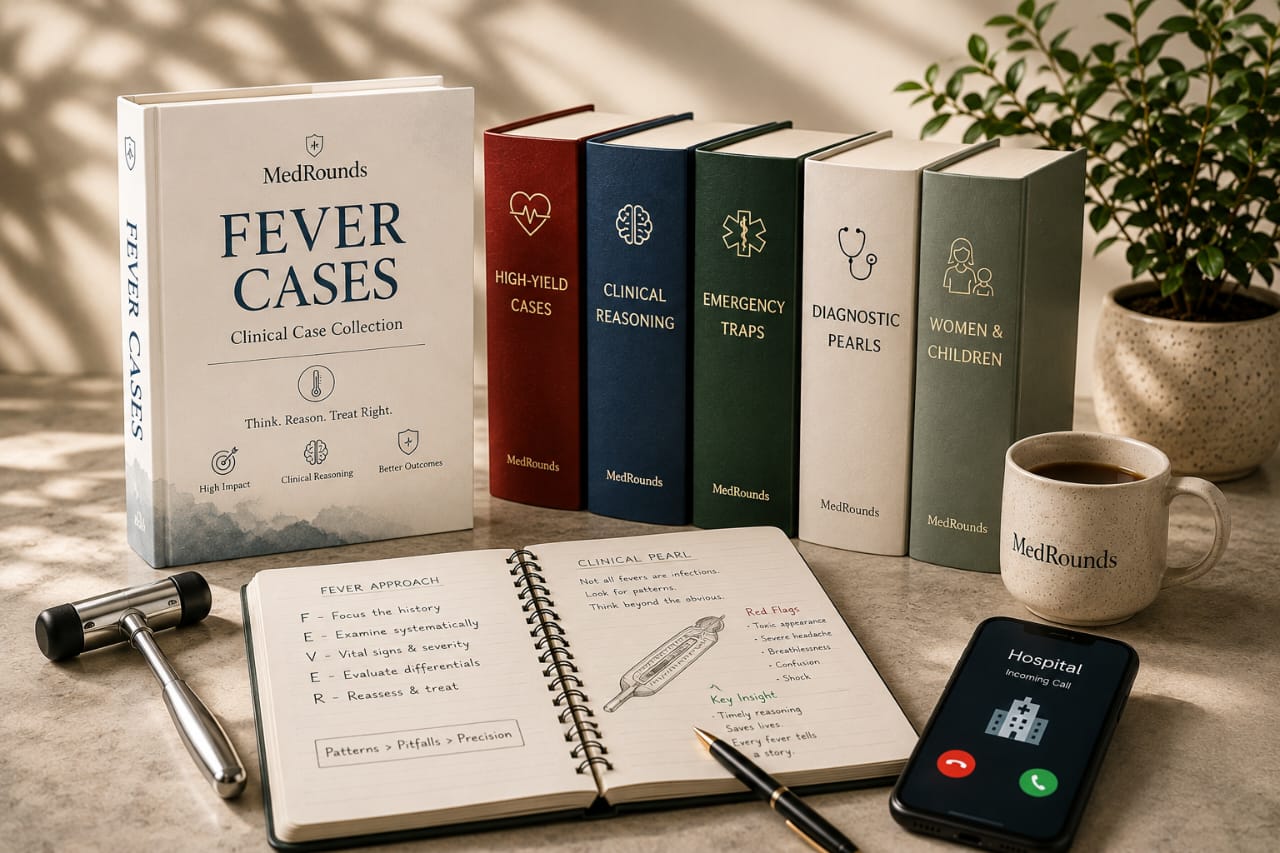
Fever Cases Volume 1
Strengthen your approach to patients with fever through carefully selected 35 clinical cases designed to improve diagnostic…
Fever Cases Volume 1
New to MedRounds?
See how MedRounds cases help you think through a case, not just reveal the diagnosis.
Why This Series Matter
Fever is one of the most common reasons patients seek medical attention, yet it remains one of the most challenging symptoms to evaluate.
The same symptom may represent a self-limiting viral illness, a life-threatening infection, an autoimmune disease, or an underlying malignancy.
This collection helps you move beyond simply treating elevated temperatures. You’ll learn how to interpret clinical clues, prioritize differential diagnoses, identify red flags, and approach fever systematically.
What you’ll gain:
- A structured approach to febrile patients
- Improved differential diagnosis skills
- Better recognition of dangerous presentations
- Faster identification of diagnostic clues
- More confident clinical decision-making
SERIES - FAQS
1. What types of fever cases are included?
The collection includes common presentations, atypical infections, fever with multisystem involvement, diagnostic dilemmas, and high-risk febrile illnesses.
2. Will this series help me approach fever systematically?
Yes. The cases emphasize differential diagnosis, risk assessment, red-flag identification, and evidence-based clinical decision-making.
3. Are tropical and uncommon causes of fever discussed?
Selected cases explore both common and less obvious causes of fever to broaden diagnostic thinking.
4. Does the series focus only on infectious diseases?
No. Fever can result from infectious, inflammatory, autoimmune, malignant, and drug-related conditions. The cases reflect this broader clinical approach.
5. Are management strategies included?
Yes. Each case discusses the diagnostic approach, initial management, and important clinical considerations.
6. How long does it take to complete a fever case?
Most cases are designed for rapid review and can usually be completed in 10–15 minutes.
7. Can these cases be used as quick revision material?
Yes. They are specifically designed to support both in-depth learning and rapid revision.
Explore more from MedRounds
Discover other premium case series, concise clinical guides and articles designed to strengthen clinical reasoning and improve diagnostic confidence.